How to play backgammon (tavla): rules, dice, hitting, bearing off and openings
✍️ Güncel Oyun Oyna Team 📅 ⏱ 6 min read
Backgammon, called tavla in Turkish, is a two-player game with 15 checkers each and two dice. You can't choose your roll, but how you play it is entirely up to you, and over many games those decisions decide who wins. This guide covers every rule in order, from the layout of the board to bearing off, and ends with a table of the best moves for each opening roll. In our Backgammon game only legal moves are highlighted in green, so you can also learn the rules simply by playing.
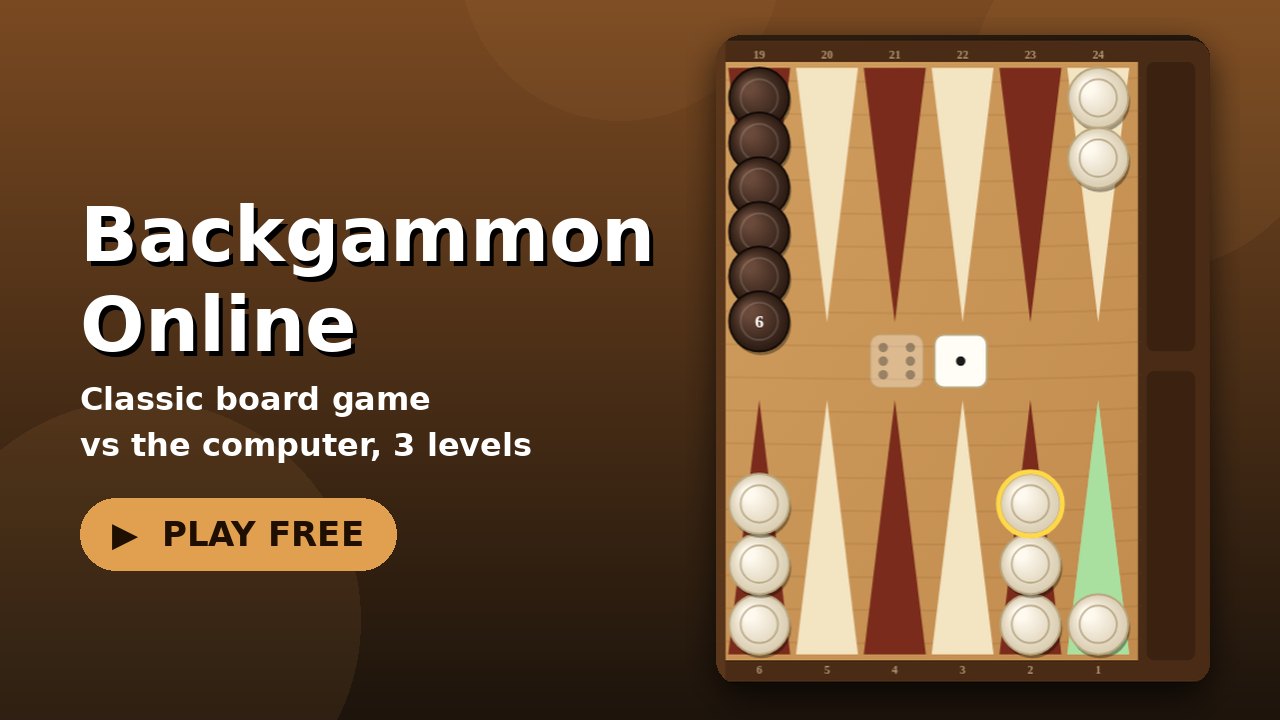
The board and the starting position
The board has 24 narrow triangles called points, split into four quarters of six. From your side, points 1-6 are your home board and points 19-24 are your opponent's home. In our game you play white: your home is at the bottom right and you move from point 24 down towards point 1.
Your 15 checkers start like this:
| Point | Checkers | Notes |
|---|---|---|
| 24 | 2 | Deep in your opponent's home |
| 13 | 5 | Your midpoint |
| 8 | 3 | Just outside your home |
| 6 | 5 | Inside your home |
Your opponent's checkers mirror yours. At the start each side needs 167 pips to bear off: 2 × 24 + 5 × 13 + 3 × 8 + 5 × 6.
Who goes first?
Each player rolls one die and the higher roll starts; ties are rolled again. Under international rules the starting player plays those two dice. As is common at Turkish tables, in our game the starting player rolls again, so doubles are possible on the very first move.
Dice and movement
On your turn you roll two dice. For each die you move one checker forward that many points. With 5-2 you can move one checker 5 and another 2, or one checker 5 and then 2 (or the other way round).
Doubles: if both dice show the same number, you play that number four times. A roll of 4-4 moves 16 pips in total.
Forced move rules
- If you can play a die, you must.
- If you can play both dice, you must play both.
- If only one die can be played and either could be played on its own, you must play the larger one.
- If neither die can be played, your turn passes.
You don't need to memorise these: our game only lets you make legal moves.
Points, blots and hitting
A point with two or more of your checkers is made: your opponent cannot land there. A single checker on its own is a blot.
If you land on a point where your opponent has a blot, you hit it. The hit checker goes to the bar in the middle of the board. A player with a checker on the bar may not move any other checker until it has re-entered.
Entering: a checker on the bar enters in the opponent's home board. For white, a roll of 1 enters on point 24 and a 6 on point 19. You can't enter on a point your opponent has made, and if all six points of their home are made (a closed board) you can't move at all that turn.
Bearing off
Once all 15 of your checkers are in your home board (points 1-6), you may start bearing off.
- If a die matches the point a checker sits on, you can remove that checker. A 4 bears off a checker from point 4.
- If there is no checker on that point, you can use the die to move a checker inside your home instead.
- If the die is higher than your highest occupied point, you bear off from the highest point. If your furthest checker is on point 3, a 5 or a 6 takes it off.
If one of your checkers is hit while you are bearing off, you must bring it back home before you can bear off again.
Winning and the gammon
The first player to bear off all 15 checkers wins. If you finish before your opponent has borne off a single checker, you win a gammon, which counts double.
Our game has no doubling cube and no triple backgammon win. Your points depend on the opponent level and whether you scored a gammon:
| Opponent | Win | Gammon |
|---|---|---|
| 😊 Easy | 10 points | 20 points |
| 😐 Medium | 20 points | 40 points |
| 😈 Hard | 35 points | 70 points |
What to play on your first roll
Openings have been studied for centuries. The table below shows the most popular first moves, which modern computer analysis also supports. "8/5 6/5" means one checker from point 8 to 5 and one from 6 to 5.
| Roll | Move | Idea |
|---|---|---|
| 3-1 | 8/5 6/5 | Makes the 5-point, the best point in your home |
| 4-2 | 8/4 6/4 | Makes the 4-point |
| 6-1 | 13/7 8/7 | Makes the 7-point (bar point) |
| 5-3 | 8/3 6/3 | Makes the 3-point |
| 6-5 | 24/13 | Runs a back checker to safety |
| 6-4 | 24/14 | Advances a back checker |
| 6-3 | 24/18 13/10 | Escape and build |
| 6-2 | 24/18 13/11 | Escape and build |
| 5-4 | 24/20 13/8 | Eyes your opponent's 5-point |
| 5-2 | 13/8 13/11 | Brings builders down |
| 5-1 | 13/8 24/23 | Safe development |
| 4-3 | 24/20 13/10 | Flexible development |
| 4-1 | 24/23 13/9 | Flexible development |
| 3-2 | 24/21 13/11 | Flexible development |
| 2-1 | 13/11 24/23 | Flexible development |
| 6-6 | 24/18 24/18 13/7 13/7 | Makes two points at once |
| 5-5 | 13/3 13/3 | Makes the 3-point |
| 4-4 | 24/20 24/20 13/9 13/9 | Takes your opponent's 5-point |
| 3-3 | 8/5 8/5 6/3 6/3 | Two home points |
| 2-2 | 13/11 13/11 6/4 6/4 | Makes the 4-point |
| 1-1 | 8/7 8/7 6/5 6/5 | Bar point and 5-point together |
Under international rules doubles can't be your first move, but in our game they can because the starter rolls again, so the double moves are included.
Common mistakes
- Leaving blots for no reason. An opponent's checker within six pips hits a blot directly about one time in three.
- Forgetting the bar. With a checker on the bar you can't move anything else until it enters.
- Trying to bear off too early. A single checker outside your home stops you bearing off.
- Leaving the back checkers too late. As your opponent builds their home, your checkers on point 24 get trapped. Move them when the dice allow.
FAQ
Are the dice fair?
Yes. The dice are completely random and the computer can't see or change them. If you get a terrible roll, you can watch a short ad once per game to roll again.
What happens if I leave mid-game?
Your game is saved. Even if you close the browser, you can pick up where you left off.
Can I play with a friend?
Yes. Use Play Online on the backgammon page to open a table and send the link for a one-on-one game.
What should I learn next?
Making points, building primes and knowing when to race are the next steps. Our Turkish guide Tavla stratejileri covers them with probability tables.
#tavla kuralları#tavla nasıl oynanır#kırma#pul toplama#mars#tavla açılış hamleleri
Related guides
 🀄 Card & Board Games
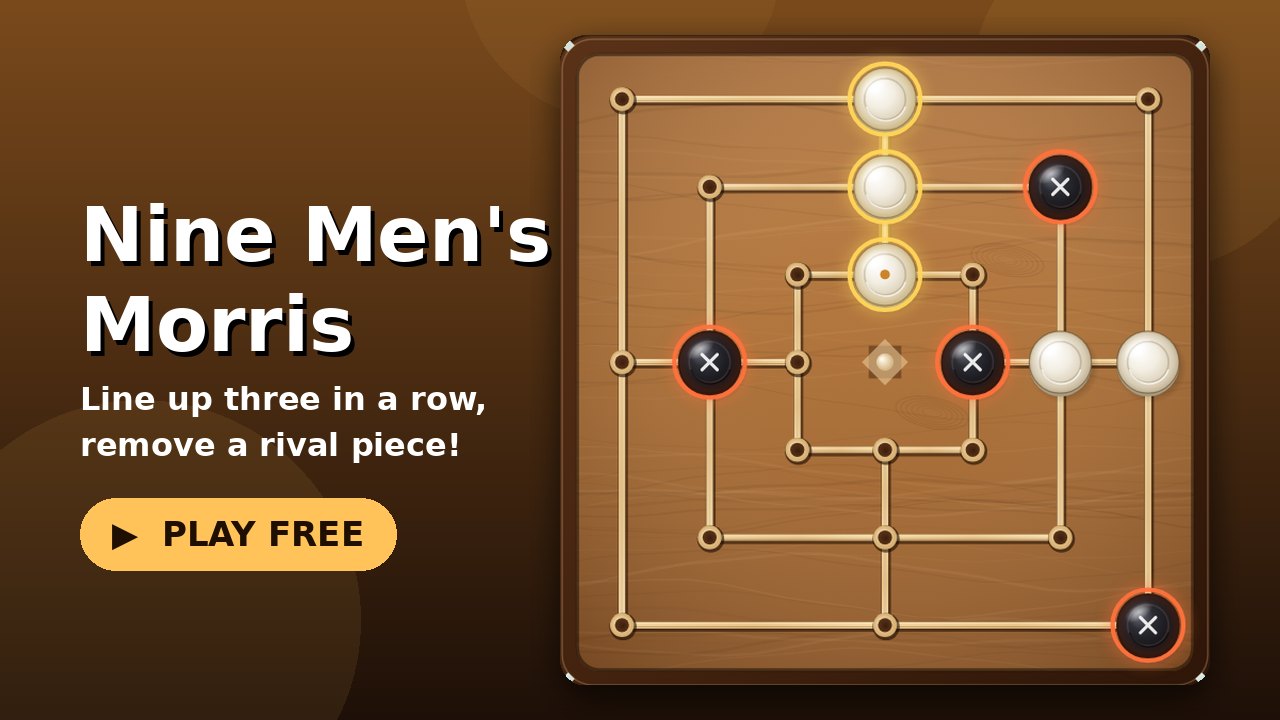
How to play Nine Men's Morris: rules and winning tactics
Nine Men's Morris rules step by step: the board and its 24 points, placing, moving and flying, forming mills and removing pieces, the draw rules and winning tactics.
 🀄 Card & Board Games
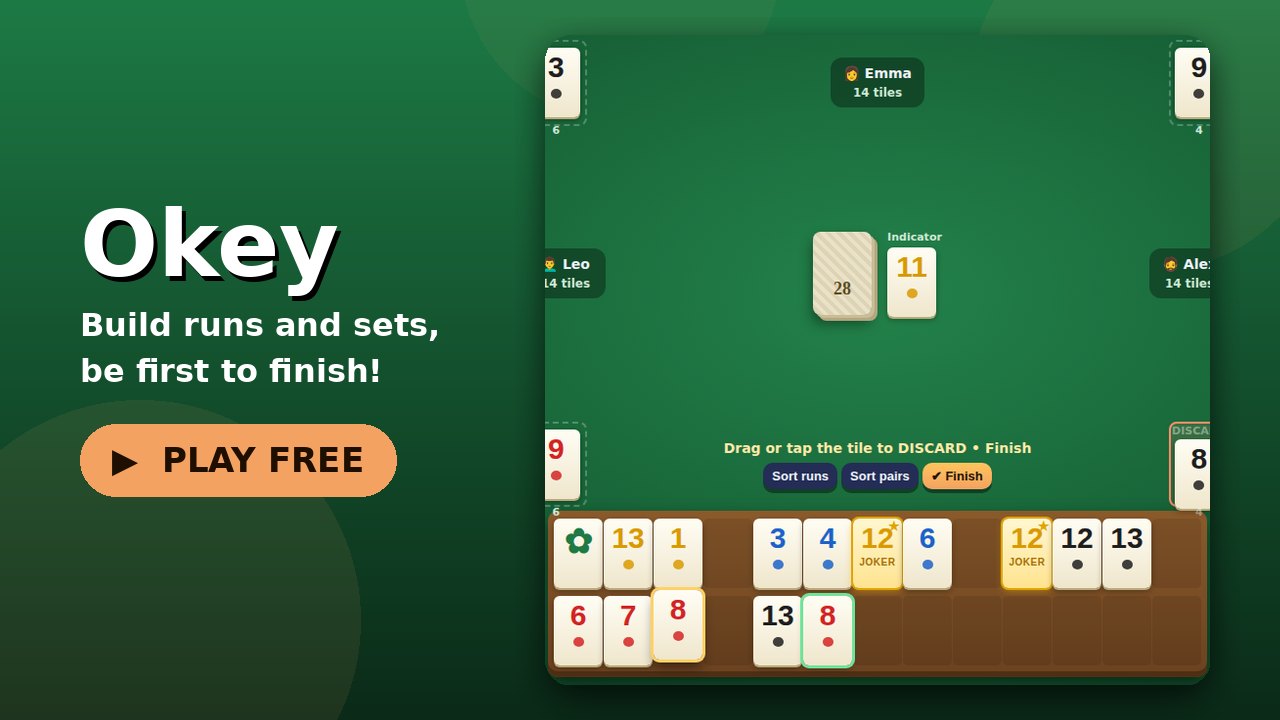
How to play Okey: the complete rules from deal to finish
Okey rules step by step: the 106 tiles, the indicator and the joker, runs and groups, finishing with pairs and how points work on Güncel Oyun Oyna.
 📚 Learning
Turkey's 81 provinces and plate codes: easy ways to learn them and a Turkey Map Master guide
The logic of Turkish plate codes (01-67 alphabetical, 68-81 by creation date), all 81 provinces by region, memory techniques that stick and the Turkey Map Master modes.