Minibus Driver guide: fast change, happy passengers and garage upgrades
✍️ Güncel Oyun Oyna Team 📅 ⏱ 7 min read
In Minibus Driver you don't steer: the dolmuş follows the curves of the route on its own. Your job is the gas, the brake, the lanes and, above all, the change. What decides a trip's earnings is not speed so much as picking people up in the right place, dropping them off in the right place and counting the change for a crumpled twenty in a couple of seconds. This guide covers quick ways to work out change, exactly how tips and happiness work, what each fine costs and the best order for garage upgrades, all based on the rules of our Minibus Driver game. At the end there is a short look at Turkey's dolmuş culture.
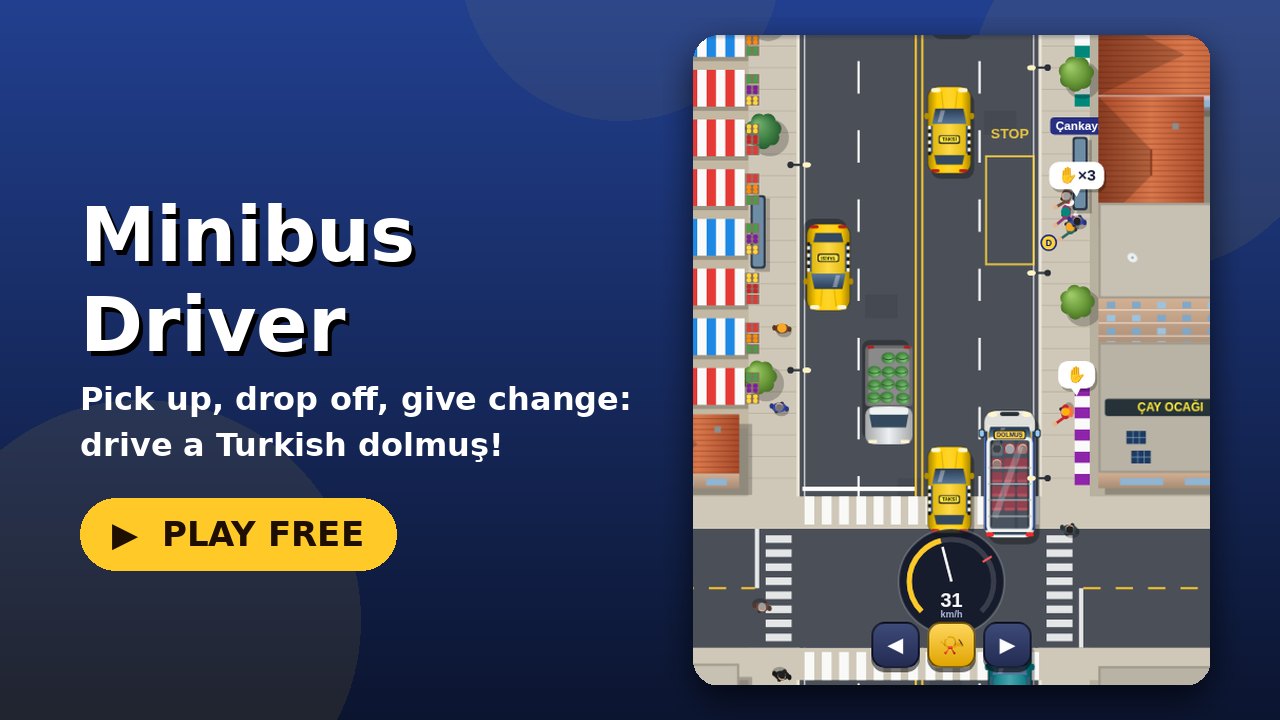
Change: two ways to work it out
When a passenger gets on, they tell you the fare and hand over money. Your cash box holds 1, 5, 10, 20, 50, 100 and 200 lira. Subtract the fare from what they paid, tap the money to count out the difference and press Hand over. On a keyboard, keys 1-7 pick the money and Enter hands it over.
Method 1: counting up (the cashier's way)
Instead of subtracting, count up from the fare to the amount paid. For a 38 lira fare paid with a 100: 38 to 40 is 2, 40 to 50 is 10, 50 to 100 is 50. Change: 50 + 10 + 1 + 1 = 62. You pick one note or coin at each step, so it is much harder to go wrong.
Method 2: largest first
Work out the difference, then start from the biggest note: 62 = 50 + 10 + 1 + 1. It is quick and keeps the tray short.
Group payments
Passengers sometimes pay together: "Two full fares and one student!" Add up the fare first. On Kadıköy–Moda a full fare is 30 and a student fare 20, so two full and one student is 80. Paid with a 100, the change is 20. Learn the route's fares from the first few passengers and group payments become easy.
| Route | Full | Student | "2 full + 1 student" | Change from 100 |
|---|---|---|---|---|
| Kadıköy – Moda | 30 | 20 | 80 | 20 |
| Kızılay – Ulus | 30 | 20 | 80 | 20 |
| Konak – Bornova | 34 | 23 | 91 | 9 |
| Taksim – Beşiktaş | 40 | 27 | 107 | (from 200: 93) |
| Taksim – Kadıköy | 50 | 33 | 133 | (from 200: 67) |
Speed earns tips, mistakes cost happiness
A timer bar runs above the change panel. It starts at about 12 seconds on the first routes and shrinks on later ones, down to 7 seconds. Here is what happens:
| What you did | Result |
|---|---|
| Correct change in under 3 seconds | Fare + big tip (bigger on later routes) + happiness up |
| Correct change in 3-5.5 seconds | Fare + small tip + happiness up |
| Correct change, but slower | Fare + a little happiness |
| Too much change | Most passengers pocket the extra, so you lose it; happiness dips |
| Too little change | Happiness drops sharply |
| Time ran out | You get the fare but happiness drops |
When you overpay, roughly three passengers in ten honestly hand the extra back; the rest keep it. If you notice a mistake, tap the extra money in the tray before pressing Hand over to take it back. That costs nothing.
💡 Passengers who pay the exact fare don't open the panel at all; the fare goes straight into your box. Reading the "Fare" and "Paid" boxes on the panel is faster than listening to what each passenger says.
Driving: the other half of happiness
At the end of a trip your stars depend on passenger happiness: over 30% for one star, over 60% for two and over 85% for three. Happiness starts at around 62%. Besides change, it depends on:
- Pick-ups: stop completely in the right lane next to anyone waving. Passengers always wait on the right-hand pavement, and people left waiting get annoyed.
- Drop-offs: let a passenger out within a few seconds of "Stop here!". The door won't open on a zebra crossing or in a junction, so pull over a little further on.
- Hard braking: braking at the last second knocks standing passengers over and annoys everyone else. Ease off the gas as soon as you see someone waving.
Fines: what comes out of your box
| What happened | Fine |
|---|---|
| Running a red light (camera) | 90 ₺ + route number × 4 |
| Not stopping for pedestrians | 80 ₺ + route number × 3 |
| Speeding past a speed camera | 100 ₺ + 8 ₺ per km/h over |
| Standing passengers at a police check | 110 ₺ per standing passenger |
On routes with a police check (6, 12, 15, 20, 22, 26, 29 and 30), carrying more passengers than you have seats gets expensive. You start with 14 seats. Once you are past the check, a few standing passengers are fine.
Garage: which upgrade first?
After each trip you can spend your takings on four upgrades, each with three levels:
| Upgrade | Level 1 | Level 2 | Level 3 | What it does |
|---|---|---|---|---|
| 🛑 Brakes | 500 ₺ | 1,400 ₺ | 3,200 ₺ | Shorter stops, standing riders fall less |
| ❄️ A/C | 600 ₺ | 1,600 ₺ | 3,600 ₺ | Calmer passengers, happiness drops more slowly |
| ⚙️ Engine | 700 ₺ | 1,800 ₺ | 4,000 ₺ | Higher top speed and acceleration |
| 💺 Seats | 900 ₺ | 2,400 ₺ | 5,000 ₺ | +1 seat per level (14 → 17) |
Our recommended order:
- Brakes 1 (500 ₺): the cheapest and it solves two problems: stopping exactly next to a waving passenger gets easier and standing riders fall less.
- A/C 1 (600 ₺): waiting and riding passengers become more patient and happiness fades more slowly. It is the most direct way to earn stars.
- Seats 1 (900 ₺): buy it before the first police check on route 6 to reduce the risk of standing-passenger fines.
- Brakes 2 and A/C 2: stopping distances grow on the rainy Ankara routes, where better brakes really help.
- Engine: speed earns tips, but speed cameras (routes 14, 16, 21, 23, 25, 27, 28, 30) fine you for it. Leaving the engine for last pays off for most players.
Paint jobs only change the look, so finish these upgrades before spending on them.
Dolmuş culture in Turkey
The word dolmuş means "filled up": traditionally it leaves once it is full. It runs a fixed route but doesn't wait at stops; it stops for anyone who waves and lets people off wherever they call "Stop here!". Money passed hand to hand from the back seats, someone calling "Two full fares, driver!" and the cry of "İnecek var!" as the minibus turns a corner are scenes almost everyone who grew up in Turkey knows. The 30 routes in our game are inspired by familiar streets on both sides of Istanbul, in Ankara and in Izmir, from the short, quiet Kadıköy–Moda hop to the long midnight run from Taksim to Kadıköy over the bridge.
Common mistakes
- Trying to subtract in your head and running out of time; counting up is faster.
- Pressing Hand over before you are sure; extra change rarely comes back.
- Carrying standing passengers on routes with police checks.
- Racing the amber light and getting a camera fine.
- Buying paint before the useful upgrades.
FAQ
How do points work?
Clearing a route for the first time earns 2 points (+1 bonus every 10 routes), and every new star is worth +1. To unlock the next route you need to hit the target earnings and earn at least one star.
What if the minibus breaks down?
If damage reaches 100%, the fuel runs out or the passengers revolt, the trip ends early. Once per trip you can watch a short ad to carry on from where you were.
Where else do I need quick decisions?
Try our Turkish guides to Survival Run and Swamp Raid.
#dolmuş şoförü#para üstü hesaplama#dolmuş oyunu#garaj yükseltme#bahşiş
Related guides
 📚 Learning
Turkey's 81 provinces and plate codes: easy ways to learn them and a Turkey Map Master guide
The logic of Turkish plate codes (01-67 alphabetical, 68-81 by creation date), all 81 provinces by region, memory techniques that stick and the Turkey Map Master modes.
 🀄 Card & Board Games
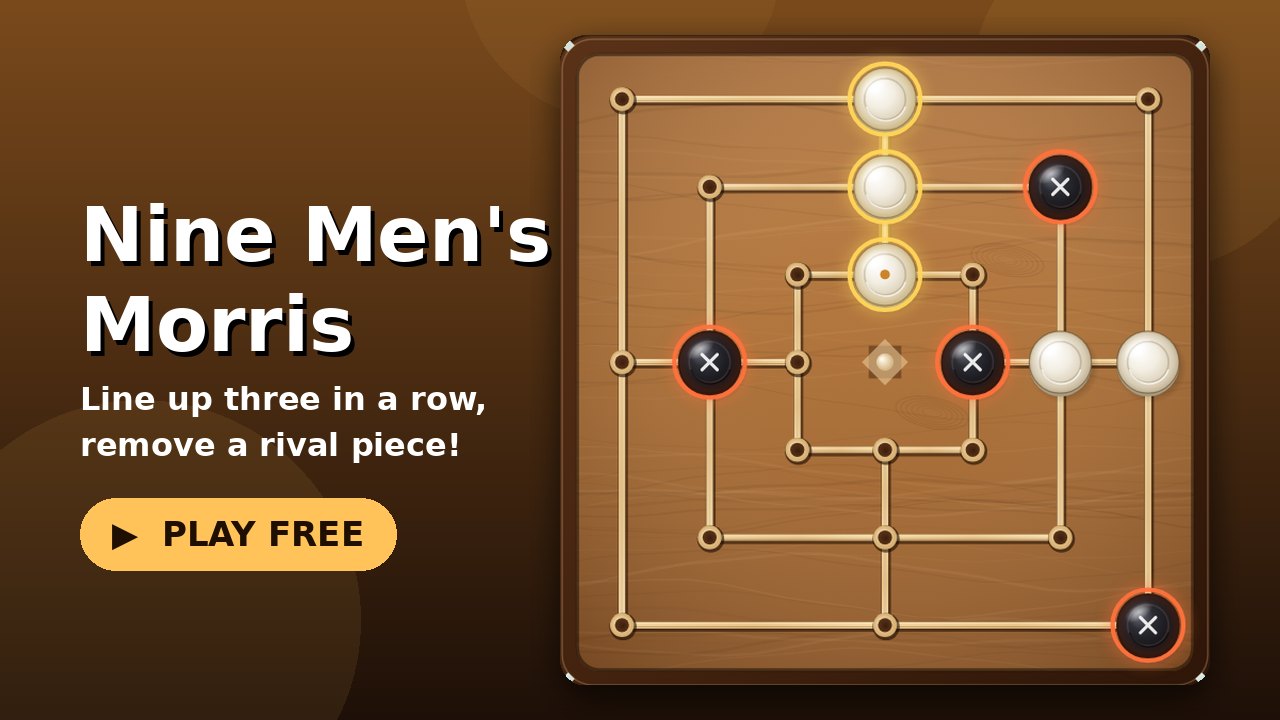
How to play Nine Men's Morris: rules and winning tactics
Nine Men's Morris rules step by step: the board and its 24 points, placing, moving and flying, forming mills and removing pieces, the draw rules and winning tactics.
 🧩 Puzzle & Brain
Rage Cube 3 guide: tile types, block-rolling logic and the first 20 levels
How the block stands and lies in Rage Cube 3, what fragile tiles, switches, bridges and splitters do, plus spoiler-free tips for the first 20 levels.